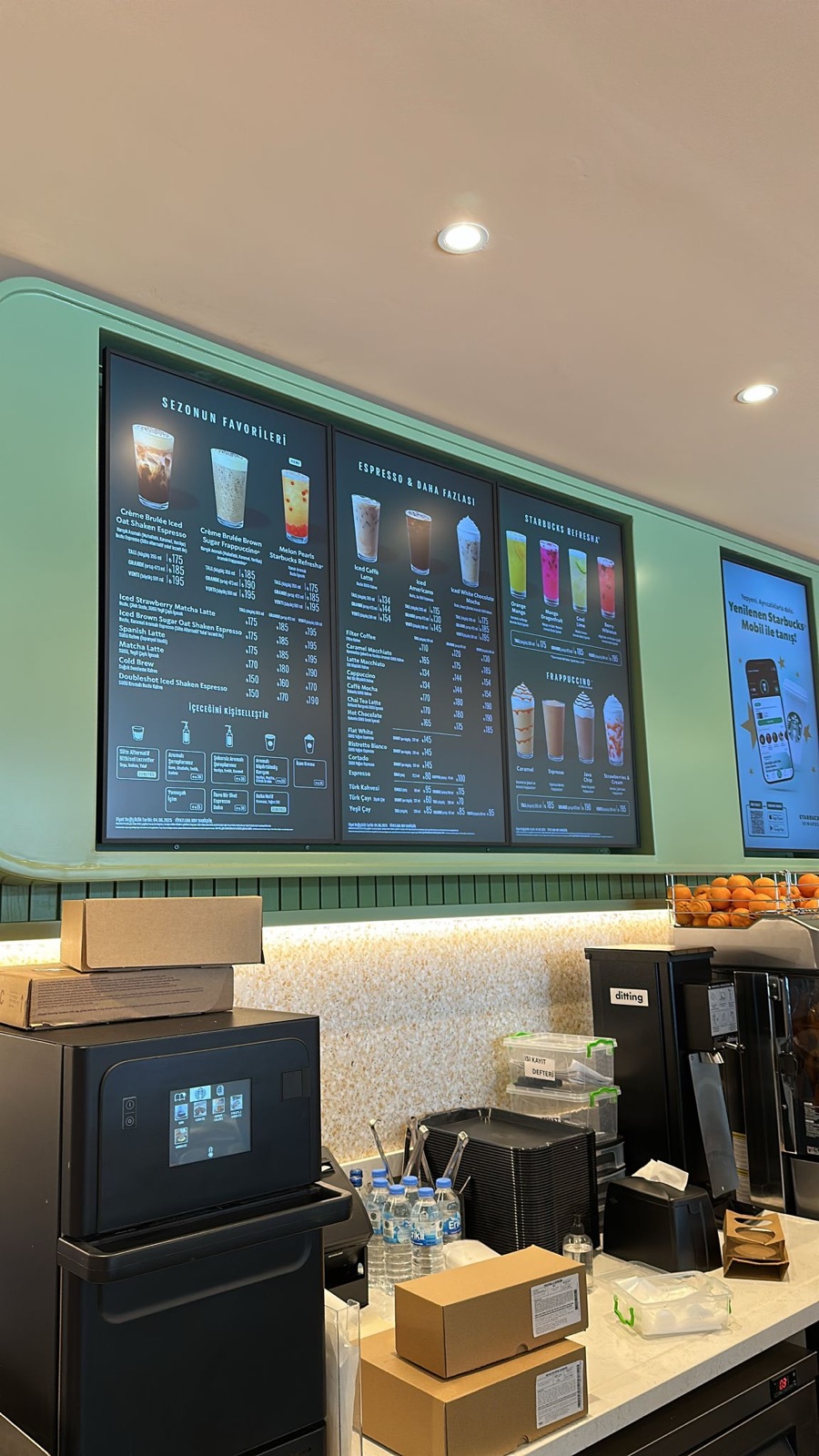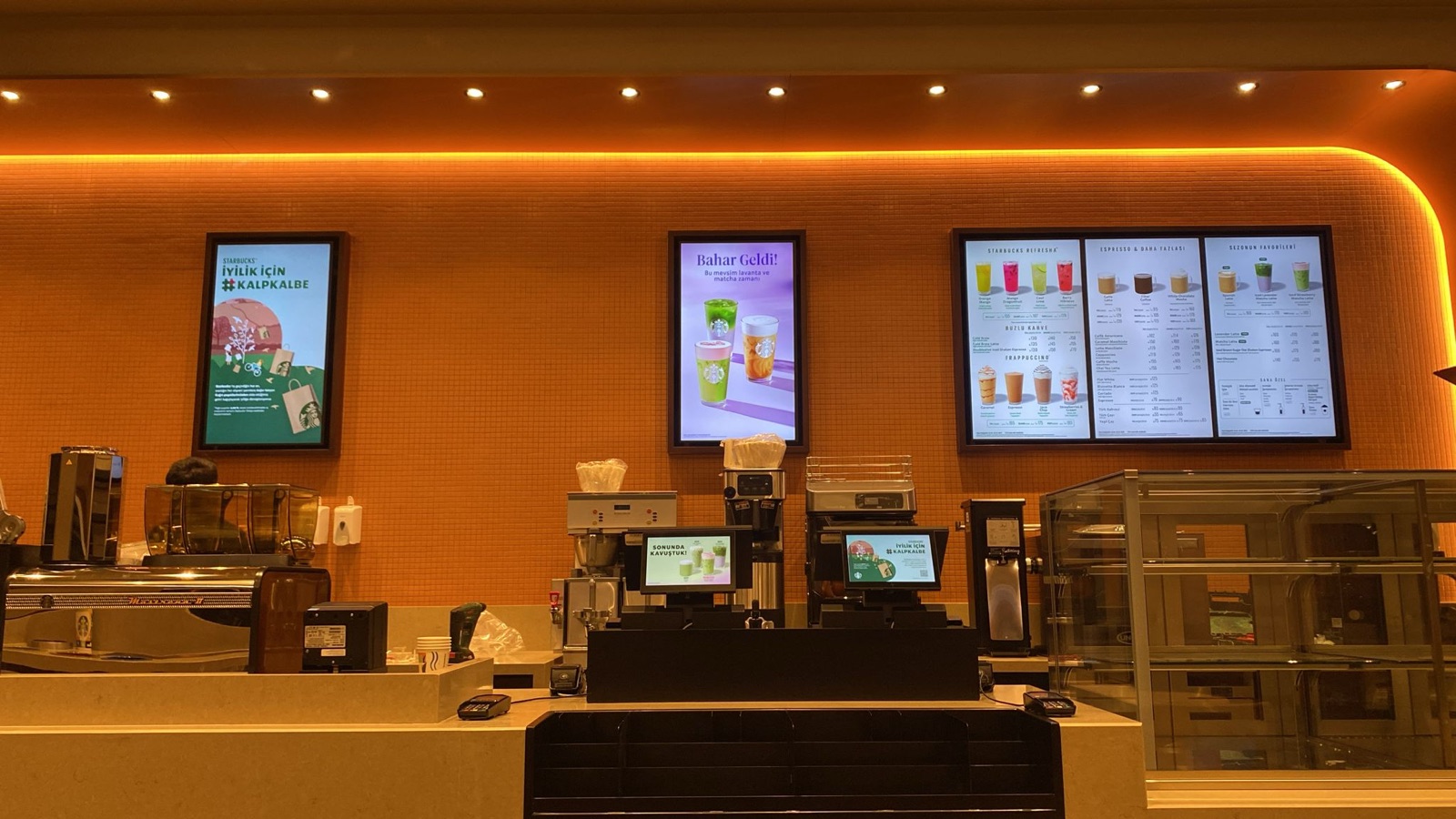
Starbucks doesn't run one playbook across every location. A store has a category, and that category changes what makes sense to show and even what things cost. The challenge isn't putting content on a screen. It's making sure each store speaks to its own context, and that the morning, the afternoon, and the evening each get the message that fits the moment. The physical world almost never gets to be that precise. The online world takes it for granted.
This runs on OctoContent, the same centralized backbone behind our largest networks, operated from one place with no one ever touching a screen in store. The displays sit where it counts most, the five screens behind the register and the coffee handoff, the exact point where every customer is paying attention and waiting. We built the system around seven store categories, so the content and the pricing shown are matched automatically to the type of store. The right menu, the right price, the right campaign, sorted by category without anyone deciding it store by store.
The part their team lives in day to day, and the part we're proudest of, is the calendar. Content here isn't just uploaded, it's programmed against the clock. Mornings carry one kind of marketing, afternoons another, evenings another, leaning into whatever product is trending at that time of day. They decide the sequence, what follows what, the exact minute a campaign starts and the exact minute it ends, and a message can run once and then retire itself automatically. Nothing lingers, nothing shows in the wrong store, nothing has to be pulled down by hand.
That is the quiet beginning of intelligence. A network that already knows what category of store it's in, what time it is, and what the moment calls for is a network that has started to understand its own context. Starbucks is showing today, with a precision most physical spaces never reach. Understanding the people standing at that counter is the next step, and the architecture is already there to take it.